


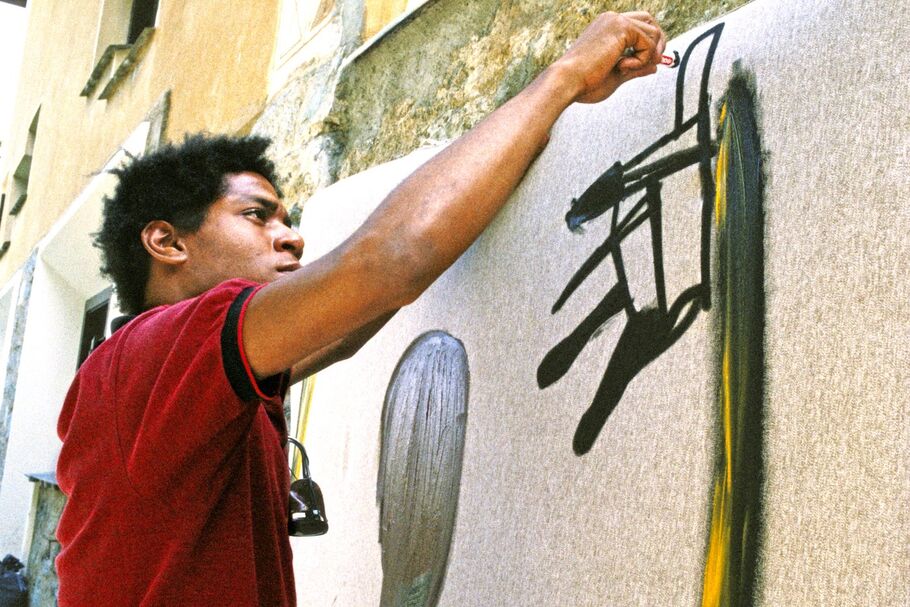
Jean-Michel Basquiat was more than just an artist—he was a cultural force. Emerging from the streets of New York City in the late 1970s and rising to global prominence in the 1980s, Basquiat left a permanent imprint on contemporary art. His work—raw, expressive, layered with history, social critique, and personal symbolism—continues to captivate audiences and inspire artists decades after his untimely death at the age of 27.
Table of Contents
Early Life and Background
Born on December 22, 1960, in Brooklyn, New York, Basquiat was the son of a Haitian father and a Puerto Rican mother. His multicultural upbringing would later influence his art, infusing it with Afro-Caribbean heritage, Latin American imagery, and references to African-American history.
A gifted child, Basquiat was fluent in French, Spanish, and English by age seven. His mother, Matilde, was a significant influence, encouraging his early interest in art by taking him to museums and enrolling him in art classes.
SAMO: Origins in Street Art
Basquiat first gained attention as part of a graffiti duo under the tag “SAMO©” (short for “Same Old Sh*t”). Alongside his friend Al Diaz, Basquiat sprayed cryptic, poetic messages across the streets of Manhattan, particularly in SoHo and the East Village. These phrases—philosophical, ironic, and often profound—quickly attracted the curiosity of New York’s downtown scene.
By the end of the 1970s, SAMO was dead—literally, as Basquiat wrote “SAMO IS DEAD” across city walls—but Jean-Michel was just beginning.
Breakthrough and Artistic Rise
Basquiat’s raw energy, intelligence, and unique visual language caught the attention of art collectors and gallerists. His first major break came in 1981 when art critic René Ricard published The Radiant Child in Artforum, heralding Basquiat as a rising star.
His style defied easy categorization—he was part of the Neo-Expressionist movement but brought his own voice to it. His canvases were chaotic and vibrant, filled with words, symbols, stick figures, crowns, skeletal heads, and historical references. He mixed high and low culture, combining anatomical sketches with graffiti scrawls and naming pieces after jazz musicians, saints, and African kings.
Friendship and Collaboration with Warhol
One of the most notable relationships in Basquiat’s life was his collaboration with pop art icon Andy Warhol. Though their artistic partnership was polarizing, it was a pivotal moment for both artists. Warhol’s clean, commercial aesthetic contrasted with Basquiat’s gestural, spontaneous style, and their joint works reflected a deep interplay of celebrity, commerce, and culture.
Their friendship also symbolized the bridging of two worlds—Basquiat, the young Black artist from Brooklyn, and Warhol, the white elder statesman of pop art.
Themes and Symbolism
Basquiat’s work was deeply layered and intellectual, often addressing complex themes like:
-
Race and Identity: Many of his paintings celebrated Black historical figures (like boxer Joe Louis or jazz great Charlie Parker) or critiqued the marginalization of Black people in America.
-
Mortality and Power: He frequently used skulls and anatomical imagery, referencing both life and death, science and humanity.
-
Royalty and Divinity: His iconic crown motif elevated his subjects, transforming them into kings or saints, especially those historically overlooked.
His art was not merely visual—it was political, philosophical, and emotional.
Struggles and Death
Despite his success, Basquiat struggled with fame, addiction, and the pressures of being commodified by the very establishment he once critiqued. His use of heroin intensified in the mid-1980s, particularly after Warhol’s death in 1987, which affected him deeply.
On August 12, 1988, Jean-Michel Basquiat died of a heroin overdose in his Manhattan apartment. He was just 27, joining the mythic “27 Club” of artists who died young.
Legacy and Influence
Basquiat’s impact has only grown since his death. Today, his works command tens of millions at auction. His life story has been told through films (Basquiat, 1996), documentaries, books, and exhibitions across the globe.
More importantly, Basquiat’s influence permeates popular culture—from hip-hop and fashion to modern painting. Artists like Banksy, Kehinde Wiley, and countless others cite him as an inspiration.
He broke barriers not just in art, but in representation. As one of the first Black artists to penetrate the elitist world of fine art, Basquiat opened doors for future generations.
Final Thoughts
Jean-Michel Basquiat was not a painter in the traditional sense—he was a visual poet, a cultural prophet, and a rebel with a brush. He transformed the language of art, infused it with the rhythm of the streets, and gave voice to histories that had long been silenced. In doing so, he became eternal.